Dry Herb Vaporizer vs Bong — Which One Is Actually Better?

A straight-up comparison of two very different ways to smoke — so you can figure out which one fits your life.
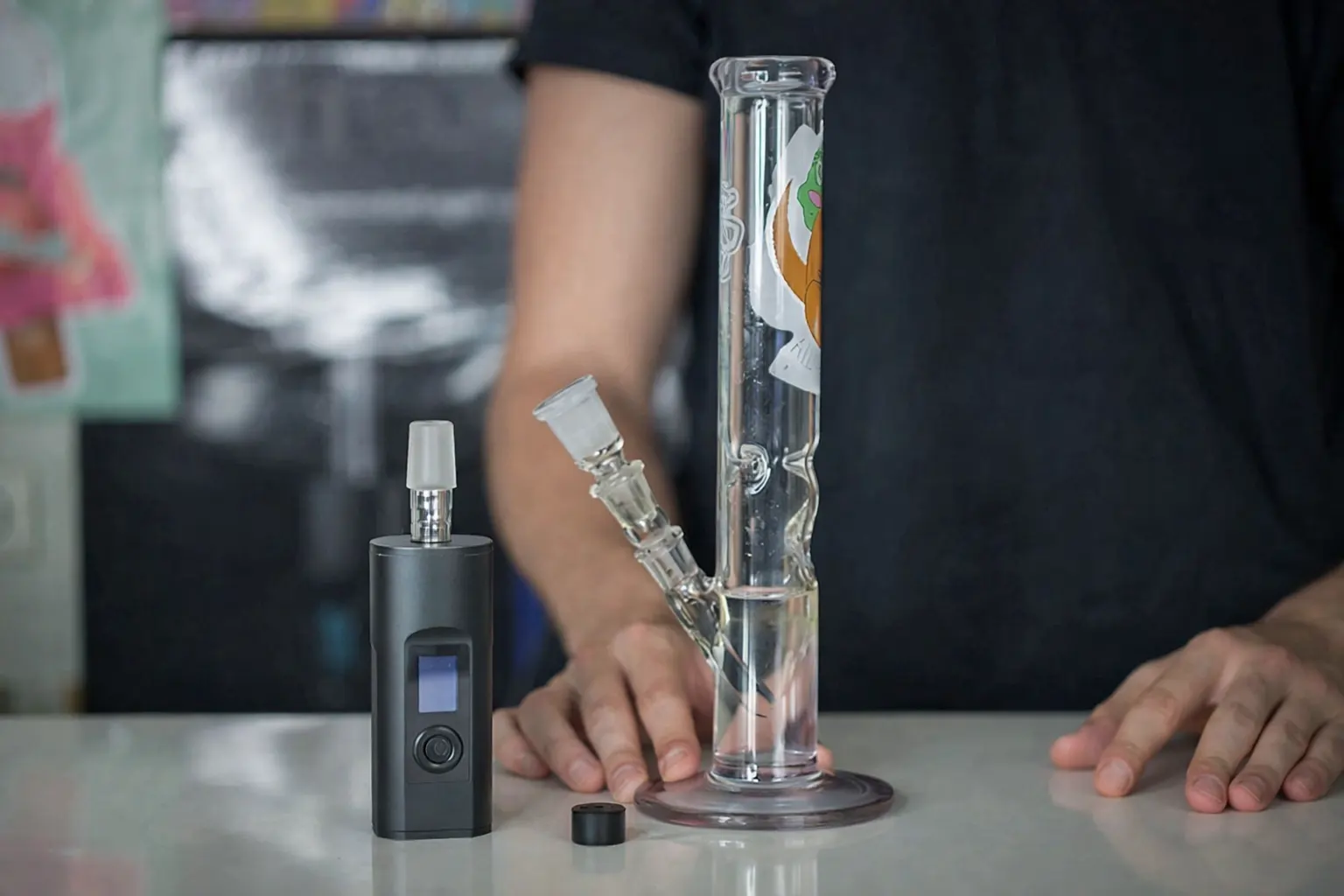
This is one of the most common debates in the smoking community — and honestly, it doesn’t have a single right answer. A dry herb vaporizer and a bong are two completely different tools that suit different people, different situations, and different priorities.
What this article does is lay it all out plainly: how each one works, what it’s good at, where it falls short, and who should probably be using which. By the end, you’ll have a clear picture — and hopefully a clearer idea of what belongs in your own setup.
| ℹ️ NOTE — This article is for informational and educational purposes only. Always act responsibly and in accordance with the laws of your country. |
First — How Do They Actually Work?
The Bong
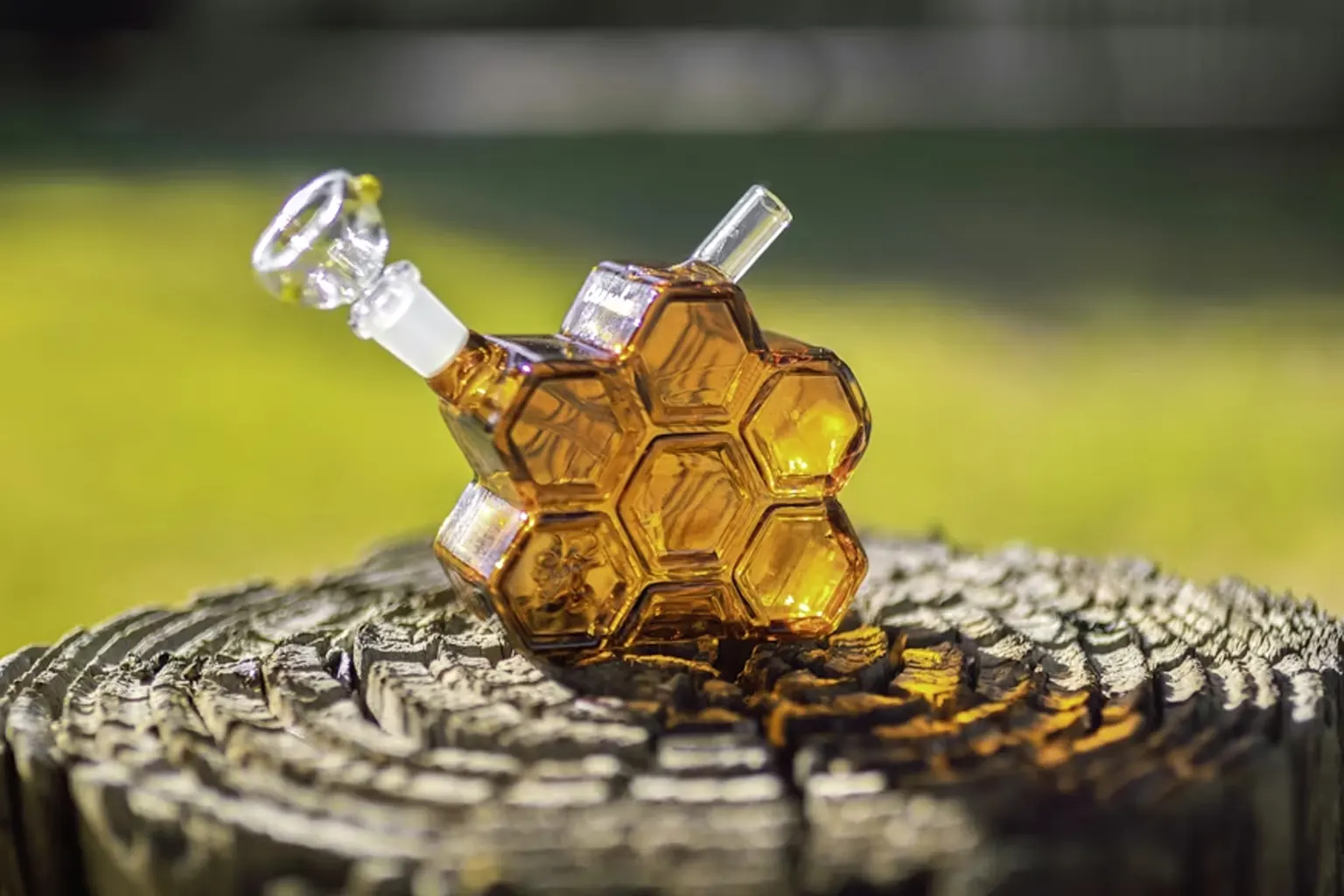
A bong burns your herb. You pack the bowl, apply a flame, and the smoke travels down through the downstem into water, which cools and filters it before it reaches your lungs. It’s combustion — the same process as a joint or a pipe, just with water in the middle to smooth things out. The result is a dense, full hit that’s immediately satisfying. If you want to know more about the mechanics, check out the High Finds bong buying guide for a full breakdown.
The Dry Herb Vaporizer
A dry herb vaporizer heats your herb to a specific temperature — hot enough to release the active compounds as vapour, but below the point of combustion. Nothing actually burns. Instead of smoke, you get a lighter, cleaner vapour that still delivers the full effect. The flavour profile is generally much more distinct than with a bong, because you’re not incinerating the terpenes along with everything else.
At a Glance — Side by Side
| 🌿 Dry Herb Vaporizer | 💨 Bong |
| Heats herb via convection/conduction | Burns herb via combustion |
| Produces vapour | Produces smoke |
| More flavour, lighter on the lungs | Denser, harder-hitting rips |
| Precise temperature control | No temperature control |
| Higher upfront cost | Wide range — from budget to high-end |
| Discreet, low odour | Noticeable smell |
| Requires charging | No power needed |
| Herb lasts longer per session | Burns through herb faster |
| Learning curve to use well | Straightforward from day one |
Vapour vs Smoke — What’s the Real Difference?
This is the big one. Combustion creates byproducts beyond just the active compounds — carbon monoxide, tar, and other residue that come from actually burning plant matter. Vaporizing skips that process entirely. You’re inhaling a much thinner vapour with less of the harsh stuff.
What that means practically: vaporizer hits tend to be easier on the throat and lungs, less cough-inducing, and noticeably more flavourful — especially with quality herb. The tradeoff is that the hit feels different. It’s lighter, less dense, and some people find it takes a session or two to adjust to the sensation before they start appreciating it.
A bong hit is unmistakably a bong hit. That thick, cool, water-filtered smoke has a weight to it that vapour doesn’t replicate. If that experience is what you’re after, a vaporizer will never fully replace it.
Discretion and Smell
Vaporizers win this category pretty convincingly. The vapour dissipates faster, smells less pungent, and leaves far less residual odour on furniture, clothes, and curtains. For anyone sharing living space with people who don’t smoke, or who needs to keep things low-key, a vaporizer is a significantly more considerate option.
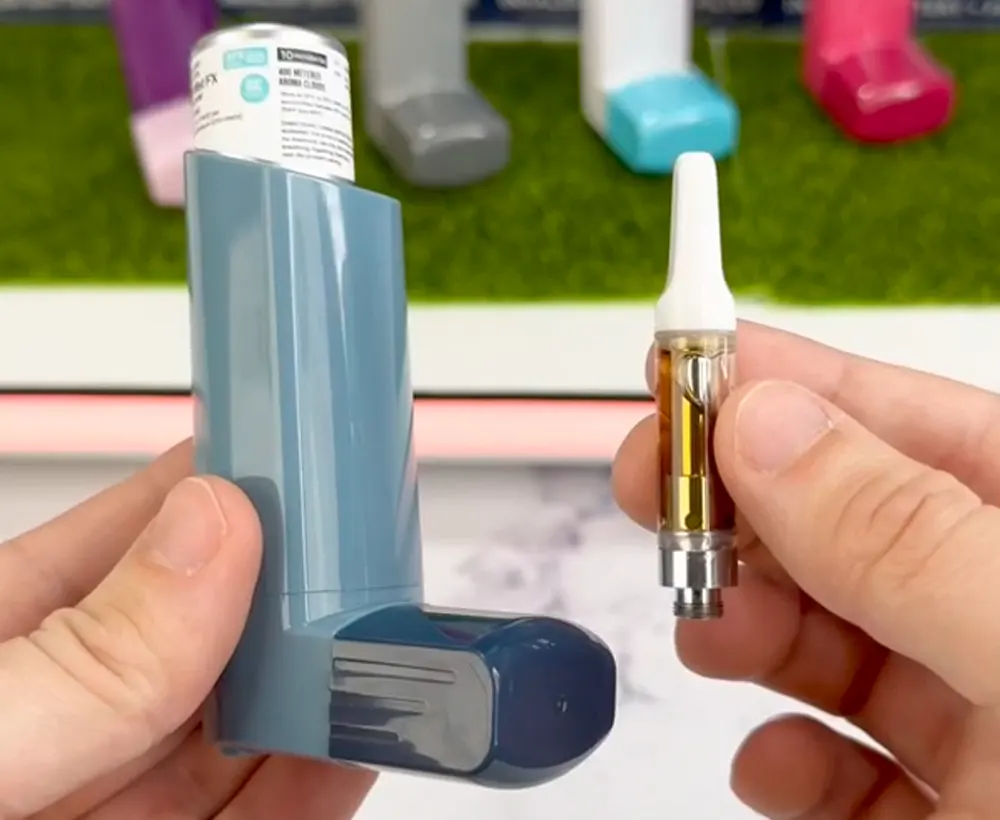
Some vaporizers take stealth even further. The Pulsar Scribe looks and functions like an actual pen. The Smyle Labs Inhaler 510 Battery is built to pass as a medical inhaler at a glance. These aren’t just novelty — they’re genuinely discreet tools for people where discretion matters.
A bong, on the other hand, is not subtle. The smell is immediate and lingers. It’s a home setup, a social ritual, something you do when you’re comfortable and have the space for it.
Which One Gets More Out of Your Herb?
Vaporizers, by a noticeable margin. Combustion is inefficient — a significant portion of your herb is simply burned away before it ever reaches your lungs. Vaporizing extracts more of the active compounds at lower temperatures, meaning you typically need less herb to achieve the same effect.
Over time, this matters. If you’re a daily user, the savings from vaporizing can actually offset the higher upfront cost of a quality device reasonably quickly.
Bongs are less efficient but not wasteful if you’re using them correctly — keeping the bowl packed tight, not letting smoke sit too long before clearing it. Still, if efficiency is a priority, the vaporizer wins.
Flavour — This One Surprised a Lot of People
Ask a vaporizer convert what they miss least about their old setup and they’ll probably say the flavour. Vaporizing at lower temperatures preserves terpenes — the aromatic compounds that give different strains their distinct taste and smell. The result is herb that actually tastes like itself, rather than ‘burnt plant’.
Bong hits taste like bong hits. Clean water and a clean bowl helps, but combustion fundamentally changes the flavour profile. You get a heavier, more familiar smoke taste that many people genuinely love — but it’s not the herb speaking, it’s the fire.
Neither is objectively better here. It’s a preference. But if you’ve never tried quality herb through a vaporizer at the right temperature, it’s worth experiencing at least once.
Ease of Use
Bongs are simpler. Pack, light, inhale, done. There’s no setup menu, no battery to charge, no temperature to think about. You can hand a bong to someone who has never used one before and they’ll figure it out in about thirty seconds.
Vaporizers have a learning curve. You need to grind your herb correctly (finer than for a joint, more evenly than for a bong), pack the chamber with the right density, choose a temperature, and learn how to draw on it properly — slower and steadier than you might expect. Get any of those wrong and you either get weak hits or combust the herb entirely, which defeats the point.
Once you’ve figured out your device, it becomes second nature. But out of the box, a bong is more immediately intuitive. Something like the Zenco UNO — a drinkable vaporizer with a genuinely different delivery format — is a good example of how far vaporizer design has come in terms of making the experience feel approachable and social rather than clinical.
Cost — What Are You Actually Looking At?
Bongs
Entry-level glass starts around $30–50. Mid-range quality (4–5mm borosilicate, decent perc) sits at $80–150. High-end and artisan pieces go well beyond that. Check our bong buying guide for the full breakdown on what different price points actually get you.
Dry Herb Vaporizers
Budget vaporizers exist in the $50–80 range but the quality varies wildly. Most experienced users recommend spending at least $100–150 to get a device that actually vaporizes consistently rather than just scorching the outside of your herb. Quality portable devices like the Mighty, Arizer, or DynaVap sit in the $150–300 range. Desktop vaporizers — for home use only — can run $400–700 for the top tier.
The higher upfront cost is real. But factor in efficiency gains over months of daily use and the math tends to balance out.
So — Who Should Choose What?
| Go with a dry herb vaporizer if: You care about discretion and smell You want to get more out of your herb Flavour and terpene preservation matters to you You’re health-conscious about what you inhale You vape solo more than in groups You’re willing to invest upfront for long-term savings Go with a bong if: You want the most immediate, satisfying hit You smoke socially and want something easy to pass You don’t want to think about temperature or grinding technique You’re on a tighter budget You have the space and don’t need to be discreet You just love bongs — honestly, valid |
Can You Have Both? (Yes, Obviously)
Most serious smokers end up with both at some point. A vaporizer for daily solo sessions — efficient, low-odour, flavour-forward. A bong for social nights or when you just want that deep, satisfying rip without thinking about it.
They’re not competing tools, they’re complementary ones. Browse the High Finds vaporizer collection for some of the most interesting vape designs we’ve come across — from stealth builds like the Lookah Guitar Cart Battery to the wildly unique Wandjamin wand battery. And if you’re still exploring the bong side, the High Finds bong category has plenty to get lost in.
| Key Takeaways Vaporizers heat herb without burning it — smoother, more flavourful, and more efficient. Bongs combust herb through water filtration — immediate, dense, social, and simple. Vaporizers win on discretion, efficiency, and flavour preservation. Bongs win on ease of use, hit intensity, and upfront cost. Vaporizers have a learning curve; bongs are intuitive from day one. Most regular smokers end up using both for different situations. |